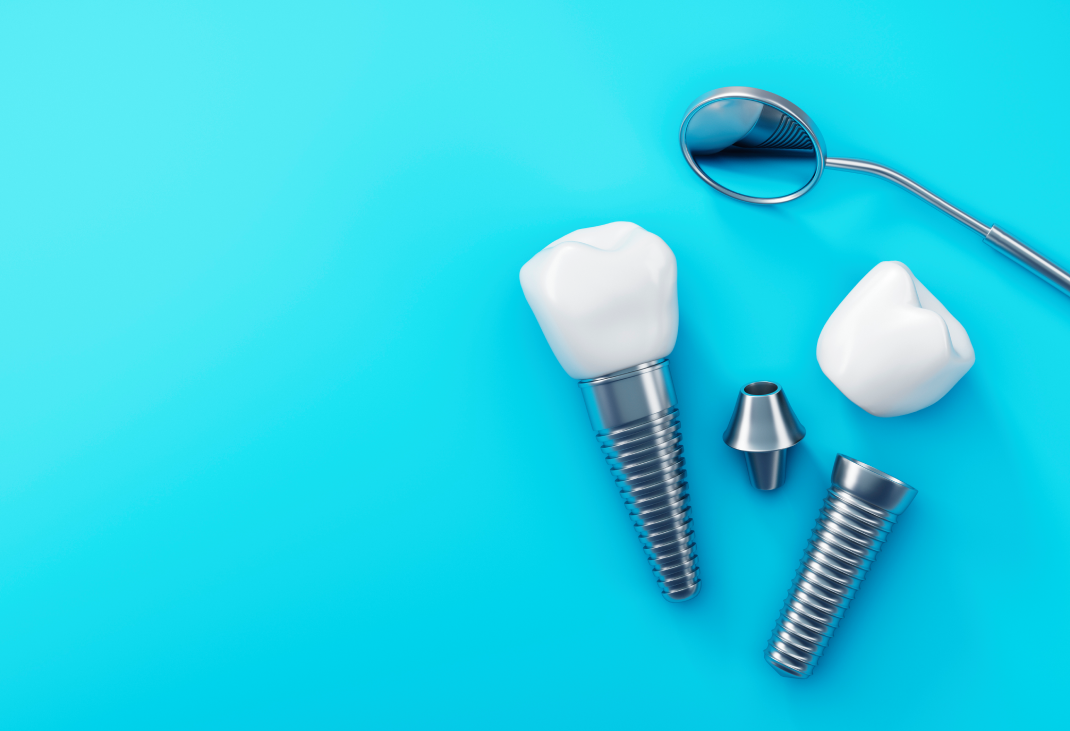
Missing teeth affect how you eat, speak, and smile, so many people searching for a natural-looking replacement ask: What are screwless dental implants, and how do they differ from traditional ones? Screwless implants offer a smoother finish, no visible access holes, and a tooth surface that more closely resembles your natural enamel.
This guide walks you through how they work, what makes them different, and who benefits most from this option.
A screwless dental implant, also called a cement-retained or press-fit implant, secures the crown to the abutment without using a visible retention screw on the chewing surface. Instead of threading a small screw through the top of the crown, your dentist either bonds the crown to the abutment with dental cement or fits it with a locking taper design.
The implant post itself still anchors into your jawbone through osseointegration, the same fusion process used in standard implants. Only the final connection between the crown and the abutment changes. According to the American Academy of Implant Dentistry, dental implants have a 95% success rate when placed and restored correctly, regardless of the retention method.
The two methods share the same surgical foundation. The difference shows up only at the crown stage.
Feature | Traditional Screw-Retained | Screwless (Cement-Retained) |
Crown Attachment | A small screw passes through the crown into the abutment | The crown bonds to the abutment with dental cement or a friction-fit lock |
Visible Access Hole | Yes, on the biting surface, covered with a tooth-colored filling | No access hole appears on the crown |
Repair Access | Comes off easily for servicing | Harder to remove without damage |
Aesthetics | Slight visibility of the filled access hole is possible | Smoother, more uniform surface, useful for front teeth |
Best Suited For | Back teeth and cases needing future retrievability | Front teeth and patients prioritizing appearance |
The Journal of Functional Biomaterials notes that cement-retained restorations remain a widely accepted option, especially when aesthetics drive the treatment plan.
No restoration suits every patient. Consider these limitations before deciding.
- Harder to retrieve: Removing a cemented crown for repair often requires cutting it off.
- Cement risk: Excess dental cement left below the gum line can trigger inflammation or peri-implantitis if not cleaned thoroughly.
- Limited access for adjustments: Future modifications to the implant or abutment become more complex.
- Skill-dependent results: Outcomes rely heavily on the dentist's precision during cementation.
You will benefit from screwless dental implants if you meet these conditions:
- You need a replacement tooth in a highly visible area, such as a front tooth.
- Your gum tissue is healthy with no active periodontal disease.
- Your jawbone has enough density to support an implant post.
- You maintain consistent oral hygiene and attend regular dental visits.
- You prefer a smoother, more natural-looking finish over easy retrievability.
If you have a history of frequent dental work, grinding, or want easier long-term maintenance, your dentist might recommend a screw-retained option instead.
The placement steps mirror those of traditional implants. The final stage is where the screwless design comes in.
- Consultation and imaging: Your dentist evaluates your oral health, reviews your medical history, and uses X-rays along with 3D scans to assess bone density, gum condition, and the ideal implant position for your case.
- Implant placement: A titanium or zirconia post is set into your jawbone under local anesthesia. The dentist makes a small incision in the gum, drills a precise channel, and secures the implant post.
- Healing period: Osseointegration takes around three to six months while your jawbone fuses with the implant post. During this time, you follow a soft food diet and maintain careful oral hygiene to support healing.
- Abutment placement: A small connector piece attaches to the implant post once healing finishes. Your dentist briefly reopens the gum tissue, secures the abutment, and allows the surrounding gums to shape around it naturally.
- Crown cementation: Your custom-made crown is bonded to the abutment with dental cement, creating a screwless finish. The dentist carefully removes excess cement, checks your bite, and polishes the crown for a seamless result.
Screwless dental implants generally fall within the same price range as screw-retained options, since the implant fixture and surgical work remain the same. The final cost depends on:
- The implant material (titanium or zirconia).
- The crown material (porcelain, zirconia, or composite resin).
- The need for bone grafting or sinus lifts.
- Sedation choices during surgery.
- Your geographic location and the dentist's experience.
For a full comparison, see our complete review of dental implant options and costs.
Ask your dentist these questions during your consultation:
- Where will the implant be placed, and how visible is the area?
- How likely am I to need future repairs or adjustments?
- What materials will be used for the abutment and crown?
- How will excess cement be managed to protect my gums?
Your dentist will balance aesthetics, retrievability, and your oral health history before making a recommendation.
Screwless dental implants give you a smoother, more natural-looking restoration without a visible screw hole on the crown. They work best for front teeth and patients who value aesthetics, though they require careful cementation and are harder to retrieve. The right choice depends on your tooth position, oral health, and long-term goals.
At Legacy Dental, our team helps you weigh both options based on your unique smile needs.
Ready to find out if screwless dental implants suit your smile? Schedule a consultation with Legacy Dental in Salt Lake City today. Our experienced team will examine your oral health, review your goals, and design a treatment plan built around lasting results.
Call us or visit us and take the first step toward a confident, complete smile.