Tooth loss affects your bite, your speech, and your confidence, and replacing a missing tooth with an implant gives you a permanent fix. So, how long does a dental implant take from start to finish? The honest answer is anywhere from 3 to 12 months for a standard case, though some patients finish sooner with same-day options.
This guide breaks down each stage, the healing periods between them, and the factors shaping your personal timeline.
Tooth loss affects your bite, your speech, and your confidence, and replacing a missing tooth with an implant gives you a permanent fix. So, how long does a dental implant take from start to finish? The honest answer is anywhere from 3 to 12 months for a standard case, though some patients finish sooner with same-day options.
This guide breaks down each stage, the healing periods between them, and the factors shaping your personal timeline.
A complete implant treatment progresses through several stages, and each one serves a specific purpose. Here is the standard breakdown:
- Consultation and planning: 1-2 weeks.
- Tooth extraction (if needed): 1 day, with 2 to 3 months of healing.
- Bone grafting (if needed): 1 day, with 3 to 6 months of healing.
- Implant placement surgery: 1 to 2 hours per implant.
- Osseointegration (bone fusion): 3 to 6 months.
- Abutment placement: 30 to 60 minutes, with 2 weeks of healing.
- Crown placement: 1 to 2 visits over 2 to 3 weeks.
For most patients without complications, the entire process takes 5 to 9 months.
The process moves through five clear stages, and each one plays a specific role in giving you a strong, lasting result.
Stage 1: Consultation and Treatment Planning
Your first visit sets the foundation. Your dentist examines your mouth, takes 3D scans, and reviews your medical history. This stage takes 1 to 2 weeks, including time for lab work and insurance verification. You will receive a custom treatment plan with a clear timeline based on your bone density, oral health, and the number of teeth to be replaced.
Stage 2: Preparing the Site
Not every patient needs this step, but those who do should expect added months.
- Tooth extraction: If the damaged tooth is still in place, your dentist removes it first. Healing takes about 2 to 3 months before implant placement.
- Bone grafting: A weak or thin jawbone needs reinforcement. Grafting adds 3 to 6 months of healing before surgery proceeds.
- Sinus lift: Patients needing upper back implants sometimes need this procedure, adding 4 to 9 months.
You should follow every aftercare instruction during these months. Smoking, poor diet, and missed follow-ups slow healing and push your timeline back.
Stage 3: Implant Placement Surgery
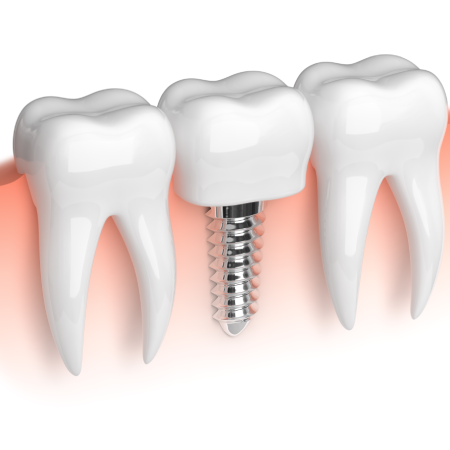
The surgery itself is faster than most people expect. Placing a single implant takes about 1 to 2 hours under local anesthesia. Your dentist makes a small opening in the gum, drills a precise channel into the jawbone, and inserts the titanium post. You walk out the same day with stitches and clear aftercare instructions.
Mild swelling and tenderness last 3 to 5 days. Most patients return to work the next day and resume eating soft foods within a week. The Mayo Clinic notes that proper oral hygiene and avoiding hard foods during this window protect your healing tissue.
Stage 4: Osseointegration, the Longest Wait
This is the stage you cannot rush. Osseointegration is the natural process where your jawbone fuses with the titanium post, creating a permanent anchor. It takes 3 to 6 months, and your timeline depends on:
- Jaw location: The lower jaw heals faster than the upper jaw.
- Bone quality: Denser bone fuses sooner.
- Overall health: Diabetes, smoking, and certain medications slow fusion.
- Age: Younger patients often heal more quickly.
During this period, your dentist checks progress with X-rays and may fit you with a temporary crown for appearance and function.
Stage 5: Abutment and Crown Placement
Once your implant fuses fully, your dentist attaches the abutment, a small connector that holds the crown. The gum needs about 2 weeks to heal around it. Then your dentist takes an impression and sends it to a dental lab. Your custom crown arrives in 2 to 3 weeks, and a final appointment secures it in place.
Your personal timeline depends on several elements working together:
- Number of implants needed: Multiple implants extend both surgical and healing time, since each site needs its own osseointegration period before crown placement can begin.
- Need for grafting: Bone or gum work adds 3 to 6 months to your timeline, as the graft needs to heal fully before implant surgery begins.
- Healing speed: Your age, overall health, and daily habits directly shape recovery, with younger and healthier patients often completing the process much faster.
- Implant location: Front teeth heal differently from molars, since bite pressure, bone density, and gum thickness vary across different areas of your jaw.
- Your dentist's protocol: Some practices use accelerated healing techniques such as immediate loading or guided surgery, which can shorten your total treatment time by several weeks.
Smokers face slower healing and higher failure rates. Quitting before surgery, even for a few weeks, improves outcomes. Research published by the National Institutes of Health shows nicotine restricts blood flow and delays bone integration.
You play a direct role in your rate of healing. Follow these steps:
- Brush gently with a soft toothbrush twice daily.
- Rinse with warm salt water after meals.
- Avoid hard, sticky, and crunchy foods for several weeks.
- Skip smoking and alcohol during healing.
- Attend every follow-up appointment.
- Eat foods rich in calcium, vitamin D, and protein.
Replacing a missing tooth with an implant takes time, but the result lasts a lifetime when done right. Most patients complete the process in 5 to 9 months, while those needing grafts or extractions need closer to a year. Your timeline depends on your health, healing speed, and treatment plan.
At Legacy Dental in Salt Lake City, our team builds every implant plan around your specific needs and walks you through each step with clarity and care.
Ready to restore your smile with a permanent solution? Book your dental implant consultation at Legacy Dental today. Our experienced team will assess your case, explain your personal timeline, and design a treatment plan built around your goals.
Call us or visit us to take the first step toward a confident, complete smile.